
Helping children build their own thinking in the age of AI.
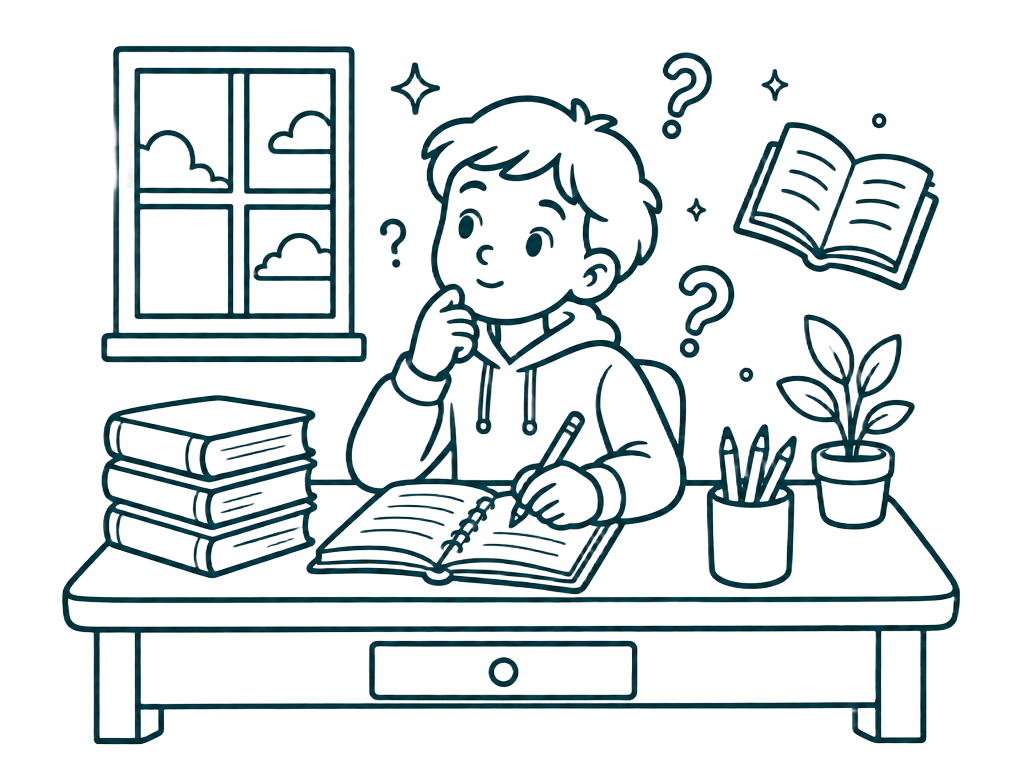
It works through questions, structure, and small next steps — so the child keeps sorting ideas, explaining their thoughts, making decisions, and solving problems.
AI will be part of
childhood now.
Children will use it to write, study, make, ask, practice, and solve.
The question is whether that help strengthens their thinking, or slowly replaces the parts they still need to build.
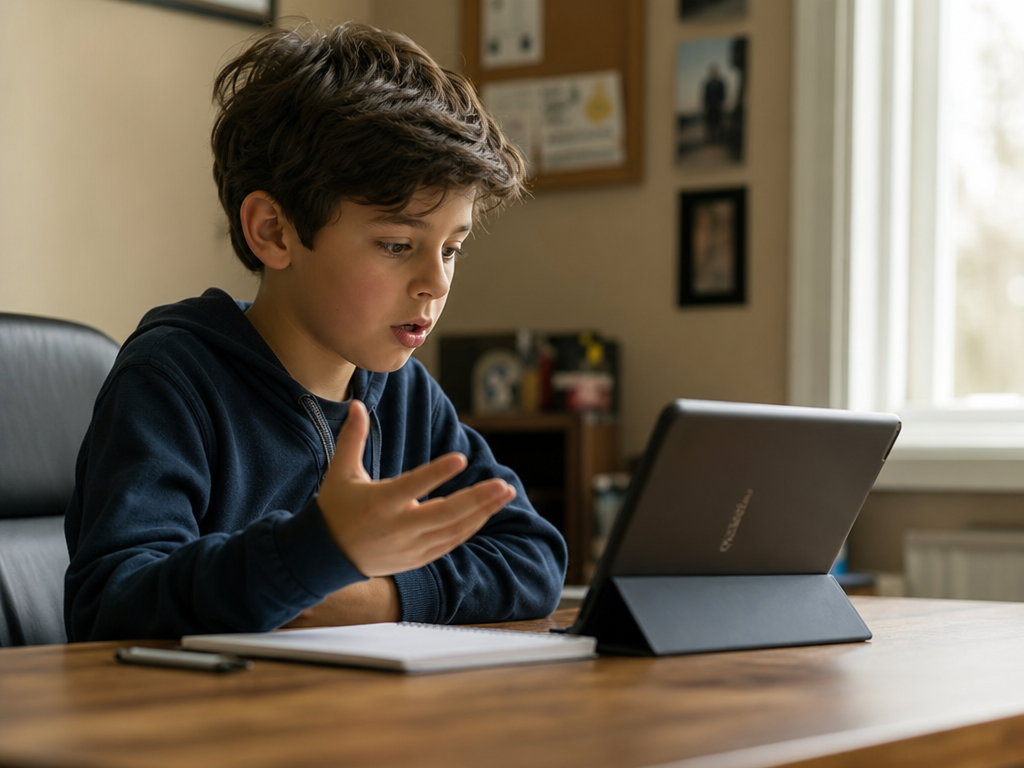
kids ages 9–17 say they'd turn to an AI chatbot for help before a trusted adult — a teacher, a counselor, a parent.
of kids say their parents haven't talked with them about AI at all.
Source: Common Sense Media, 2026 — nationally representative survey of 1,204 kids ages 9–17.
of students agree: "The more students use AI for their schoolwork, the more it will harm their critical thinking skills."
Their use still rose — from 48% to 62% in the same year. Knowing isn't the same as having a way to stop.
Source: RAND American Youth Panel, December 2025.
Parents are already trying.
They talk about honesty, set limits, and block what they can.
But AI is no longer one app to avoid. It appears in browsers, search results, writing tools, study apps, and the group chat.
A child can turn in an essay made in five minutes. The page looks finished, but the thinking may never have happened. The gap shows later, on a test or when they're asked to explain their own work.
The habit forms fast — faster than most families have rules for it.
'Don't use it' isn't a plan.
Families are being handed two bad choices: keep AI away completely, or let it take over the work.
A better first relationship with AI.
Own Thinking gives families a guided practice space. Children use AI as a tool — their own thinking stays in charge, and the work remains theirs.
- Practice
Use AI as a helper, not a replacement.
- Practice
Pause before handing over the thinking.
- Practice
Ask, check, revise, and decide out loud.
- Practice
Stay in the work when it gets hard.
Built for the years when habits are still forming: steady through frustration, structured when the task feels too big, and designed to keep the child thinking, choosing, and trying.
Questions. Structure. Small next steps.
Own Thinking refuses to give the answer. It asks the exact questions that help your child think it through.
Ask
Explains what an assignment is really asking, in words your child understands — then checks they've got it
Sort
Helps the child organize their own notes and half-formed ideas.
Nudge
Points to a place that feels unclear, or asks for one more detail.
Solve
Whether it's an essay angle, a math concept, or a hard apology, the final breakthrough always comes from the child — not the machine.

Built for the moment when everyone is tired and the shortcut is tempting.
Own Thinking is patient enough for frustration, structured enough for real school nights, and careful enough to protect the child's authorship.
Shrinks the task
Turns a paralyzing assignment into a next small step.
Switches to voice
When writing stalls, the child talks it out first.
Chooses an honest finish
Helps the family pick a smaller, real end — not a fake one.
Keeps parents in the loop
A simple note when work will be late, without drama.
Proof the work stayed theirs.
Every completed session creates an Own Thinking Receipt — first draft beside final version, the questions Own Thinking asked, and the child's revision notes.
- Children
- evidence of their own capability.
- Parents
- proof that support did not replace authorship.
- Teachers
- a clearer view of process than a finished page.
"I liked the book because the main character was brave."
"I think Lina was brave because she was scared to tell the truth, but she did it anyway when everyone was watching."
- › Where did you see her being brave?
- › What made that moment hard?
- › Which part sounds closest to what you really mean?
Your child is growing up with AI.
Own Thinking helps them grow into someone who can use it with judgment — and a mind that still belongs to them.
Talk to your kid about AI before it's a problem.
Most parents don't know what to say, or where the line is between help and cheating. The free Family AI Agreement gives you the words. Fill it in together, both sign it, and keep it where they do homework — so your family already knows the rules when your kid is stuck on an assignment and tempted to let AI just do it.
Free whether or not you use the app. No spam — just the Agreement, and a note when early access opens.